Home · Synthetic Roofing
Synthetic & Composite Roofing · Ogden & Northern Utah
Natural slate and real cedar are beautiful and difficult. Slate is heavy enough that many houses can't carry it. Cedar rots, splits, and needs upkeep. Synthetic roofing was built to solve exactly that, and it's why we reach for it on most homes that want this look.
Synthetic roofing, also called composite roofing, is a molded polymer shingle made to look like natural slate or hand-split cedar shake. It carries that look at roughly a third of natural slate's weight, so most homes can take it on their existing framing without the structural work real slate or tile can require.
One material, two looks
This is the part that confuses people. Synthetic isn't a look, it's a material. The same polymer can be molded into whichever of these your home is asking for.
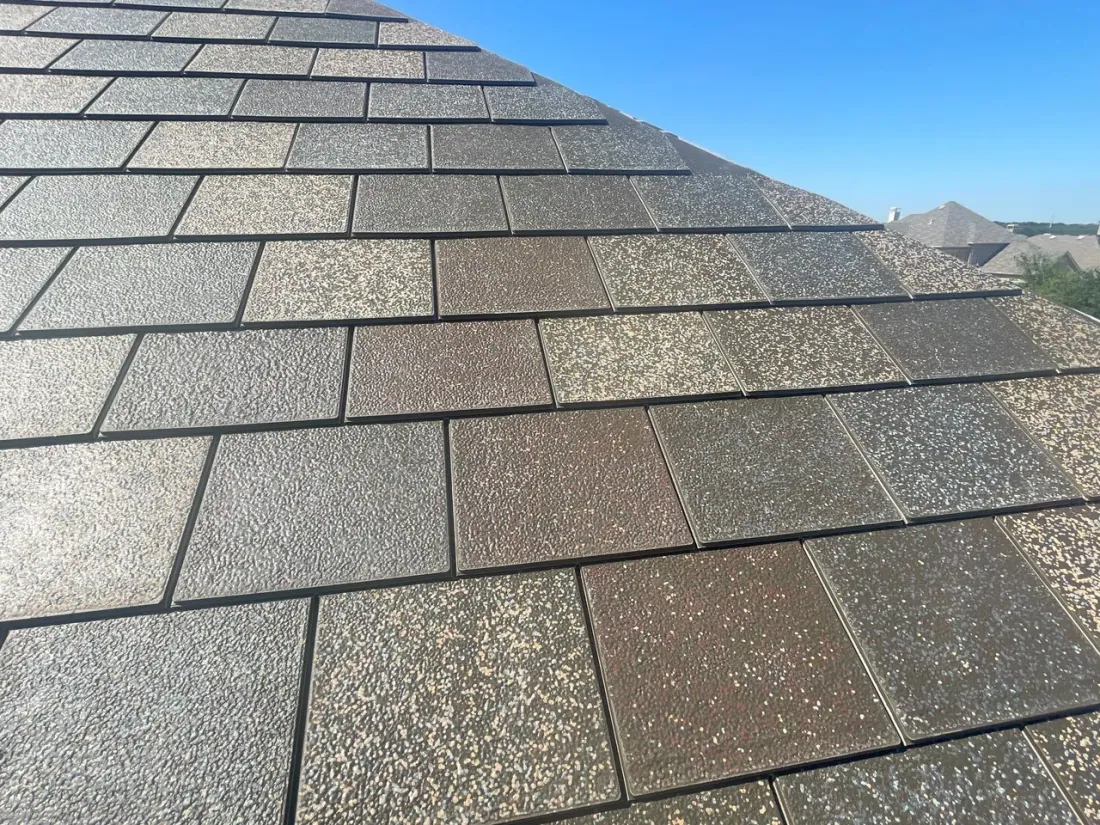
The reason most people land here. Tiles molded from real quarried slate, so the surface texture is a copy of stone rather than a printed pattern. Comes in mixed widths, which is what keeps a slate roof from looking machine-made.
Best for: a home that wants slate and can't carry it.
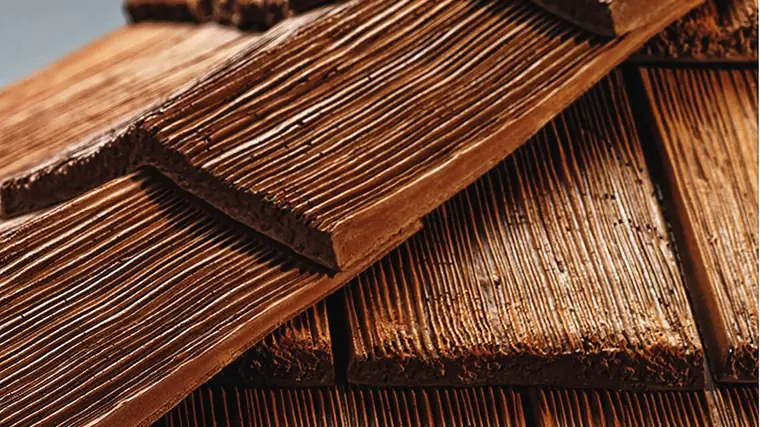
Cedar's look, none of cedar's problems. Molded from real hand-split shakes. It doesn't rot, curl, split, or feed moss, and it never needs the treatment cycle a real wood roof lives on.
Best for: replacing a tired cedar shake roof.
The honest comparison
This is the argument on stone, not on wood. Composite slate runs roughly 200 to 350 pounds per roofing square. Natural slate runs about 700 to 1,200 pounds for the same area, depending on thickness. That difference decides whether your house needs a structural engineer before anyone talks about color. Real cedar shake, for what it's worth, weighs about what composite does.
Synthetic sits well below the genuine article. Natural slate and clay tile are among the most expensive roofs you can buy, and they need installers who specialize in them. Synthetic installs closer to a normal roofing job.
Freeze-thaw is hard on stone and fired clay. Slate can delaminate and tile can crack when water gets in and freezes. Polymer doesn't absorb water the same way, so our freeze-thaw cycles work on it differently.
Real cedar is a maintenance schedule, not just a roof. It rots, curls, and splits, it needs cleaning and treatment to reach its rated life, and it needs pressure treatment to carry a fire rating at all. Synthetic shake skips every bit of that.
The other side
We'd rather tell you this up front than have you find it out from someone else. Synthetic is the right answer often, not always.
The products
Three lines cover almost everything a Northern Utah home needs. We're not tied to any of them, and none of them pays us to say this.
Composite slate and shake, made in the US from virgin resin with UV and thermal stabilizers. The tiles are molded from real slate and real hand-split shakes, and they come in mixed widths so the finished roof doesn't repeat itself.
Their slate lines run about 200 to 350 pounds per square, against 700 to 1,200 for the quarried stone.
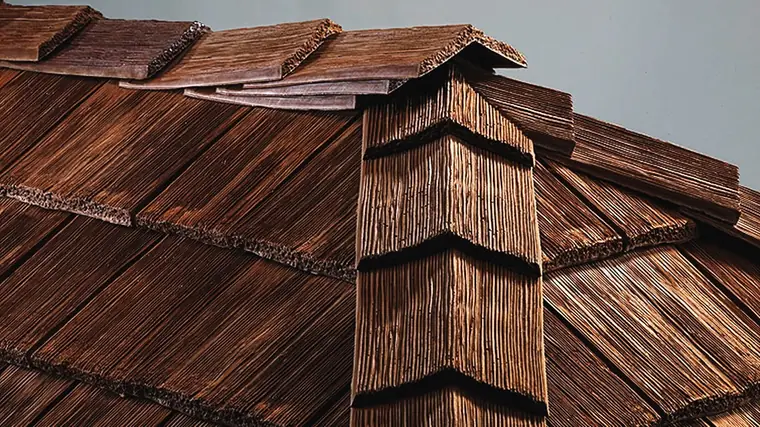

Engineered polyurethane shakes molded from hand-split cedar. This is the one we'd point at if you're replacing a real cedar roof and want the same look without going back into the rot-and-treat cycle.

A solid polymer shingle with no asphalt and no granules in it. It comes in slate and hand-split shake profiles: Classic Slate, Designer Slate, and Hand-Split Shake. Wind rating depends on the fastener: 130 mph with smooth shank nails, 180 mph with ring shank.
Synthetic prices above architectural asphalt and varies a lot by product and roof. We don't publish a range for it, because the honest number depends on which line, which profile, and your roof. You get an exact written price after the free inspection.
Color, on the shake line
Three of CeDUR's colors. The grain is molded off real hand-split cedar rather than printed on, so the texture keeps changing as the light moves across the roof through the day.
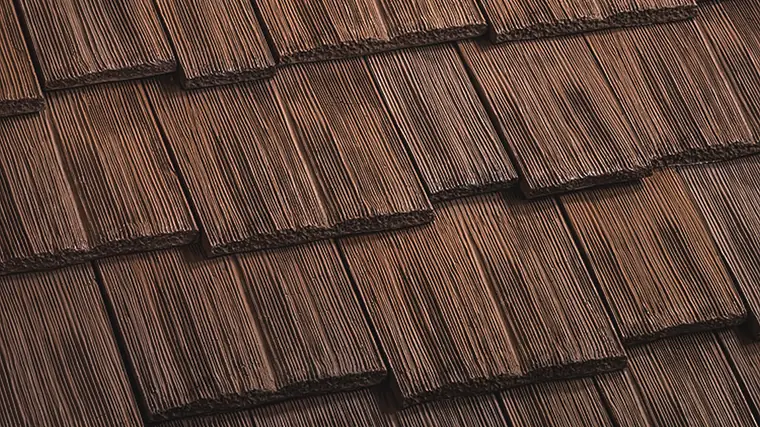
The warmest of the three, close to a fresh cedar roof that has just started to tone down. Suits brick and warm stone.
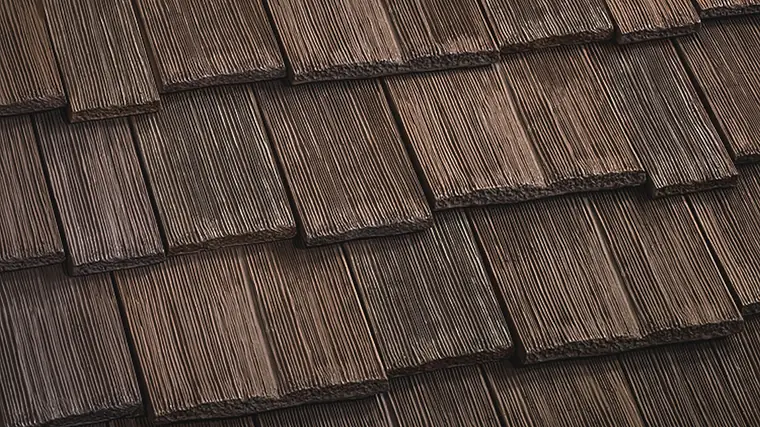
Greyed brown with real variation course to course. This is the one that reads most like cedar that has weathered a few seasons.
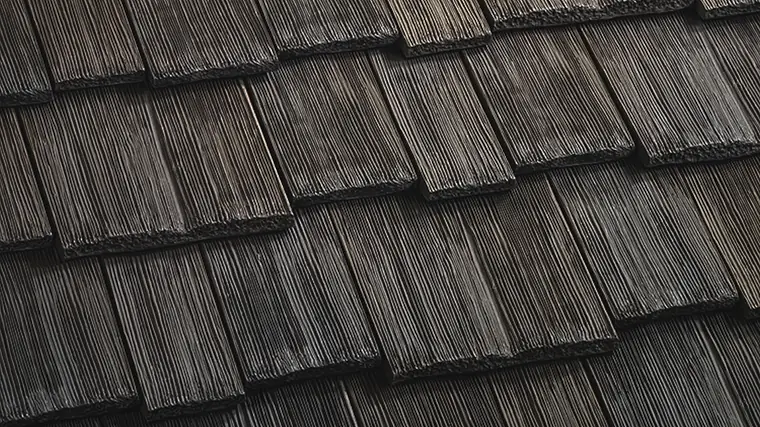
Dark charcoal with silver in it, the look of cedar that has fully greyed out. Strong against white or light-painted siding.
Manufacturer product photos, used with CeDUR's permission. Screens shift color, so look at a physical sample in daylight at your own house before you settle on one.
What backs the roof
Homeowners mix these up constantly, and the difference matters on the day something goes wrong. One covers the product. One covers the work.
This is the long one you see advertised. It covers the product itself: defects, and depending on the line, things like wind, algae, and color fading. Terms differ by brand, and coverage usually steps down to prorated after the first several years.
We'll put the actual document in front of you before you sign, not a summary of it.
The best shingle made still leaks if it goes on wrong. Our written 10-year workmanship warranty covers how the roof was put on: the nailing, the flashing, the underlayment, the valleys. If our work causes a leak, we come back and fix it.
How our warranty works →A manufacturer won't cover a bad install, and we don't cover a defective product. Between the two you're covered either way, and knowing which is which is what saves you the runaround if you ever have to make a claim.
A roof's fire class belongs to the whole assembly, not to the shingle by itself. The same composite tile can rate Class A or Class C depending on the deck and the underlayment beneath it. So "Class A rated" is a question about the system we're installing, not a property of the box it came in, and we'll show you the listing for the exact assembly.
This matters more if you're up against open ground or a canyon. Wood roofs are legal in Utah as a general matter, but plenty of places restrict them locally. Park City has prohibited them in parts of town since the nineties, and closer to home, Bountiful's code requires a Class A or B fire rating on the streets east of Bountiful Boulevard, which untreated shake doesn't meet. Utah cities have been adopting wildland-urban-interface maps since 2026, so the rule for your address may be newer than the last time anyone looked it up. Ask your building department before you fall for a wood shake. Synthetic sidesteps the question entirely.
Synthetic roofing FAQ
From the ground, almost nobody can. The tiles are molded from the real material, so the texture is a copy rather than a stamped pattern, and mixed widths keep the pattern from repeating. Up close, some products show a slight sheen that stone and wood don't have. If a perfect match matters to you, say so early and we'll bring samples out before anything gets ordered.
Manufacturer warranties on the products we install run to 50 years or a limited lifetime term, which puts synthetic well past asphalt and in the neighborhood of standing-seam metal. It does not match natural slate, which can run generations. Read the warranty terms rather than the headline number, since coverage usually drops to prorated after the first several years.
That depends on the product, and it's the one place the headline number misleads people. Hail coverage usually runs on its own shorter clock inside the long warranty, and some lines exclude hail entirely even when the shingle carries a Class 4 impact rating. Those are two different things: a rating describes how the product performed in a lab test, while warranty coverage is a separate promise with its own terms. We'll show you exactly what the line you're considering covers before you sign. If hail is your main worry, start with how impact-resistant roofing actually works.
Usually no, and that's the main reason we recommend it. Composite runs a fraction of the weight of natural slate or concrete tile, so it typically goes on existing framing. We check your decking and framing during the free inspection. If anything about your structure gives us pause, we'll tell you it needs an engineer's eyes rather than guess.
It depends on why you're buying. If you want the slate or cedar look, nothing else gets you there for the money. If you mainly want durability, a Class 4 asphalt shingle or a metal roof may be the better value. Architectural asphalt is still the right call for most Northern Utah homes, and we'll say that when it's true. More on a full replacement →
We install both. Tile and slate are real options and we work on the homes that already have them. But for most people choosing that look from scratch, synthetic gets you there at a fraction of the weight and cost, which is why we bring it up first. If the genuine material is the right answer for your house, we'll tell you that instead.
Financing available
Check real offers from more than 20 lenders through Acorn Finance in about two minutes. The initial check is a soft credit pull, so it won't touch your score. If an offer works, take it. If not, you've lost nothing but the two minutes.
Roughly $80 to $160 a month for every $10,000 financed (6.99–8.94% APR, 84–240 months). Examples, not offers.
Loans from $1,000 to $100,000 through Acorn Finance's lender network. Compass isn't a lender. Every rate, term, and approval comes from the lenders themselves, and moving forward with an offer may involve a hard credit check.
Free inspection
Tell us a little about your roof and we'll get right back to you. Prefer to talk now?
Calls returned within the hour · Mon–Sat
952 28th St, Suite D · Ogden, UT 84403
Serving Ogden & Northern Utah · Locally owned & operated
Free inspection, real samples, and a written price. No pressure either way.